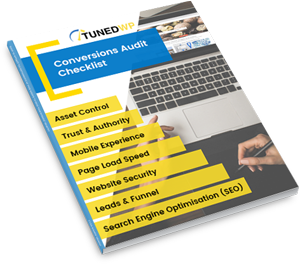
If you're getting traffic but no enquiries, that's usually a conversion problem. Your website is likely creating friction somewhere between a visitor's first impression and taking the next step.
Conversion rate optimisation helps identify and remove that friction so more visitors become enquiries.

Key takeaways:
WHAT'S INSIDE:
Getting traffic is only half the battle. If your website isn't turning visitors into enquiries, one or more issues are likely getting in the way:
People can't choose you if they don't understand why they should. If your website doesn't quickly explain what you do and why you're different, many visitors will move on.
One of the biggest reasons visitors don't enquire is because your website sounds like every other business in your industry.
Quality service.
Trusted experts.
X years of experience.
None of those things tell people what you actually do or why they should choose you. If your competitors could copy and paste the same words onto their website, your messaging isn't giving people a reason to enquire.
Generic messaging doesn't just confuse potential customers. It also makes it harder for search engines and AI search tools to understand what your business actually does. That means you're less likely to be recommended when someone is looking for exactly what you offer.
A lot of businesses try to appeal to everyone.
But trying to appeal to everyone often means you don't stand out to anyone. When you try to be known for everything, it's harder for people to see what you're really good at.
People are more likely to enquire when they feel they're dealing with a specialist who understands their specific problem. The more focused your messaging is, the easier it is for the right clients to recognise you're the right fit.
Even if people understand what you do, they still need a reason to choose you over everyone else. If your website doesn't explain what makes your business different or why you're the better choice, visitors have little reason to enquire.
Your value proposition doesn't have to be clever or catchy. It just needs to answer a simple question: "Why should I choose you instead of someone else?"
Your business doesn't stay the same forever, but your website often does. If it's still promoting services you no longer want to focus on or doesn't reflect where your business is heading, you'll keep attracting the wrong enquiries.
Your website should reflect the business you're building today, not the one you were running a few years ago.
That's why at TunedWP, we don't start by writing content.
We start by understanding your business, where you want to take it, and the type of clients you actually want more of. Then we refine your messaging so it's clear, consistent, and free from generic marketing fluff.
The result is a website that's easier for both potential customers and AI to understand.

Even if someone likes what you do, they still need to feel confident enough to contact you. If your website doesn't build trust, many visitors will leave without taking the next step.
People rarely take a business at its word.
Studies show that 96% of them look for reviews, ratings, or other proof that you've delivered for other customers before enquiring.
If your website doesn't include reviews, case studies, or examples of your work, visitors have to take your word for it. Genuine reviews from trusted platforms and real examples of the results you've delivered help build confidence and make it easier for people to choose you.
It's one thing to say you're good at what you do. It's another to show it.
Qualifications, certifications, supplier partnerships, industry memberships, awards, and media mentions all help reinforce your expertise. They show visitors that your business is established, credible, and recognised by others, not just making claims about itself.
People judge your website almost instantly, and that first impression plays a big role in whether they trust your business.
If your website looks like it hasn't been updated in years, visitors may wonder whether the business is still active or keeping up with the times.
What does an outdated website look like?
Lots of visitors can look impressive in Google Analytics. But not all traffic is good traffic. If the people visiting your website aren't looking for what you offer, they're unlikely to become enquiries.
You might be doing a great job of getting traffic, but are those people actually looking for your services?
Someone reading a blog post to answer a question isn't in the same situation as someone searching for a business to solve their problem.
Informational content is great for building trust and getting your name out there, but it won't always generate enquiries straight away. If most of your traffic comes from people researching rather than buying, that could explain why your enquiry numbers are low.
Google Ads and social media ads can generate plenty of clicks, but clicks don't always turn into enquiries.
If your targeting is too broad, your keywords don't match what your ideal customers are looking for, or your ads are reaching people who are simply curious rather than ready to buy, you could be paying for visitors who were never likely to become clients.
Getting more clicks doesn't help if they're coming from the wrong people. The goal is to attract visitors who are genuinely looking for the services you offer and are ready to take the next step.
Remember: a smaller number of qualified visitors often outperforms thousands of casual visitors.
QUICK TIP: Use Google Analytics, conversion tracking, and heatmaps to see where your visitors are coming from and what's stopping them from becoming enquiries.
Sometimes the biggest barrier to more enquiries is what happens once people arrive on your website. Some websites make enquiring feel effortless. Others unintentionally make people hesitate.
Every page on your website should make the next step obvious. If visitors have to stop and think about what to do next, there's a good chance they won't do anything at all.
It might be a Request a Quote button, a Book a Discovery Call button, or a Contact Us page. Whatever it is, it should be easy to find and easy to understand.
Sometimes it's not the decision to enquire that puts people off. It's the process.
Long forms, too many required fields, or asking for information people don't have on hand can make enquiring feel like hard work. The simpler and lower-effort your enquiry process feels, the more likely people are to complete it.
Giving visitors too many options can make it harder for them to make any decision at all. This is known as choice overload, where having too many options leads to analysis paralysis.
Too many menu items, buttons, or calls to action can create confusion instead of helping people move forward.
Over 52% of people browse the web on their phones rather than desktop computers. This is much higher in some markets. If your website is frustrating to use on a mobile device, you're likely losing enquiries before people even have a chance to contact you.
All these can all make visitors give up. A website that works well on a desktop doesn't always provide the same experience on a phone.
Nobody likes waiting for a slow website. If yours takes too long to load, it could be costing you enquiries without you even realising it.
People are impatient. Research shows that conversion rates can drop by up to 17% for every additional second a page takes to load.
If visitors are still waiting for your website to load, they haven't even seen what you have to offer yet. Sometimes, they won't stick around long enough to find out.
Conversion rate optimisation is about removing the little things that stop people from becoming enquiries. Website speed is one of those things. The faster and smoother your website feels, the easier it is for visitors to take the next step.
Not every problem is obvious. Sometimes your website is quietly costing you enquiries because something simply isn't working the way it should.
One of the most frustrating problems is a contact form that looks like it's working but isn't. Visitors think they've sent an enquiry, but you never receive it.
This can happen when:
Unless you're regularly testing your enquiry forms, you may never realise you're missing potential customers.
Your website might load, but that doesn't mean everything on it is working properly. You might notice:
These issues make your website harder to use and can stop visitors from taking the next step.
If your website doesn't feel safe, many visitors won't risk sharing their personal details or getting in touch. Common warning signs include:
Even if your business is completely legitimate, those warnings can be enough to stop someone from enquiring.
Clean Up & Secure My Website →
You spend time and money getting people to your website. It should be helping you win more business.
Like a good salesperson, your website should answer questions, build confidence, and make it easy for people to enquire. It should be working for your business around the clock, not just sitting online waiting for someone to find it.
If you're serious about getting more enquiries from your website, the first step is understanding what's getting in the way.
A website audit gives you a clear picture of what's working, what isn't, and where the biggest opportunities are.
Yes. Improving your conversion rate means turning more of your existing visitors into enquiries. In many cases, that's faster and more cost-effective than trying to increase traffic.
That depends on the issues and the changes being made. Some improvements can have an immediate impact, while others take time to test, measure, and refine.
Not necessarily. Many websites can generate more enquiries by improving their messaging, user experience, and technical performance without starting from scratch.
If you're already getting consistent traffic, improving conversions is often the better place to start. Turning more of your existing visitors into enquiries usually delivers a better return than simply attracting more visitors.
Justin Meadows is the founder of TunedWP and creator of the Topic Domination Method. Since 2009, he’s worked across SEO, WordPress, website performance and conversion optimisation, helping businesses get more from their websites.
His work now includes AI search, where he focuses on helping businesses build the content, authority and online presence needed to be understood and recommended by tools such as ChatGPT and Google Gemini.